THE WITCH OF BELLE FLEUR - A Review
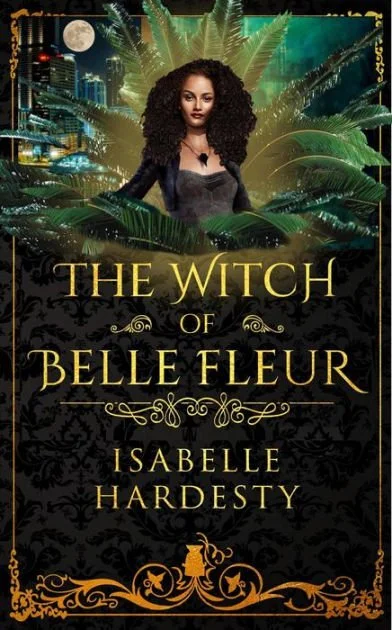
Isabelle Hardesty’s THE WITCH OF BELLE FLEUR tells the tale of Juliette, a young girl who is an actress in a telenovela. For readers who are unfamiliar with this term, a telenovela (often misspelled telenova) is a Latin American television soap opera or serialized drama, combining high melodrama with a limited number of episodes, distinct from open-ended soap operas. They are defined by intense, emotional story lines focused on romance and interpersonal conflict.
THE WITCH OF BELLE FLEUR reflects this form of entertainment in many ways. Juliette, the star of the narrative, lives near the swamps in Florida. She has been friends with the animals in the region throughout her childhood. At the novel’s opening, she travels to the wetlands seeking snake poison with her best friend, Victor. Their relationship is one of the strongest points of the book. When Victor, who we discover is a witch, has to make Juliette forget a passionate encounter between the two of them by using magic, readers are left to feel that they know more about a secret world than the heroine.
Of course, as the novel develops, Juliette learns what role she must play in the narrative. In Belle Fleur, the witches cannot fully use their powers except for Victor. Their abilities have been taken away from them, but after Juliette discovers a gem in a box while out on the snake poison expedition with Victor, she finds out the hard way that with great power comes great responsibility, and even greater risk.
For within the shadows of Belle Fleur is Thane, an evil witch who wants the Destroyer witches, those who serve him so that they can come out of the shadows and rule humans as he believes they rightfully should.
If this sounds familiar, it should. THE WITCH OF BELLE FLEUR has several similarities to the Harry Potter series. Juliette’s parents were killed a long time ago. She is left with a scar, on her arm instead of her forehead, which is a result of the battle between her parents and Thane. However, unlike Harry, Juliette is of Haitian descent, which is a nice change from fantasy fare which usually displays European influences.
The world building of THE WITCH OF BELLE FLEUR would have been enhanced if more Haitian mythologies were interwoven in the narrative, as the magical system in the novel feels a little too standard.
Juliette being an actress in a telenovela is another unique aspect of the narrative. Here, too, the novel would have benefited if that aspect of her life was delved further into. Juliette recalls how important telenovela’s were to her as a child growing up. They are cheesy and the acting is notoriously bad, but viewers, like her family, would gather together and be drawn into the drama and melodrama of the productions. Seeing more of this in the narrative universe of THE WITCH OF BELLE FLEUR would have added a unique flavor to the story line.
Overall, THE WITCH OF BELLE FLEUR could have had tighter prose and another edit, but it is fantastic that a fantasy story with Haitian witches is being written, as Isabelle Hardesty has created a series featuring Julliette that already stretches across several sequels.